
Georgia Candy Roaster squash is a variety cultivated by the Cherokees in the southern Appalachian Mountains in the 1800s. It is now listed by the Cherokee Nation and Slow Food USA as an heirloom crop. The variety offers a unique winter squash taste. It is sweeter than most squash, hence the name. Almost anyone will tell you about it being sweet, but they will then pause and try to accurately capture what it tastes like. I am going to also struggle, other than to say it is different. Sweeter yes, but not sugary sweet, a bit milder, but with more richness of flavor. That may sound confusing, and well, you are just going to try it for yourself.
BTW, you may also enjoy my Georgia Candy Roaster Soup with Beans, Collards, and Bacon.
In the early fall, check your local markets for this unusual addition to the Southern food heritage. You might want to buy a few as they store well for up to six months and actually sweeten as they age.
How Should I Prepare it?
As the name indicates, it should be roasted. There are some aspects of the physical features that need to be considered when roasting:
- the squash has a tough rind and peeling it is impossible. Some suggest cutting across the squash and roasting and serving the squash with the rind much like you would Delicata squash. I find the rind a bit tasteless and not really good or bad. So I shy away from serving the rind.
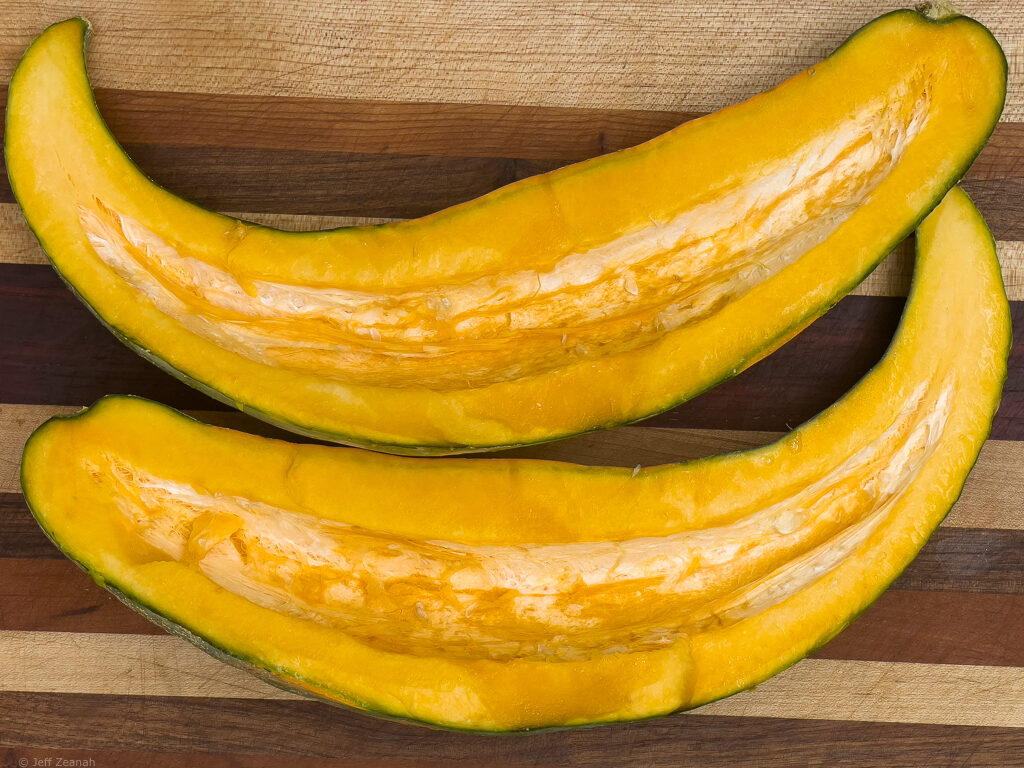
- the squash has a lot of seeds. They must be removed along with a large amount of stringy fresh, that is too tough to eat.
- they are really big, sometimes as big as 15 pounds.
- the texture is a bit different. In places, it can be as soft as any other winter squash, but in other places a bit tougher. The texture also can contain a great deal of water, which needs to be reduced.
This last issue, the texture convinced me it is best puréed. After puréeing, I suggest baking some more to remove moisture This solves the problem and makes it possible to cook ahead of time.
Initial Roast
Unlike other winter squash, I believe little is needed before roasting. I only add salt and pepper and only a little bit of olive oil. There is certainly no need for syrups, molasses, etc. The squash is sweet enough.
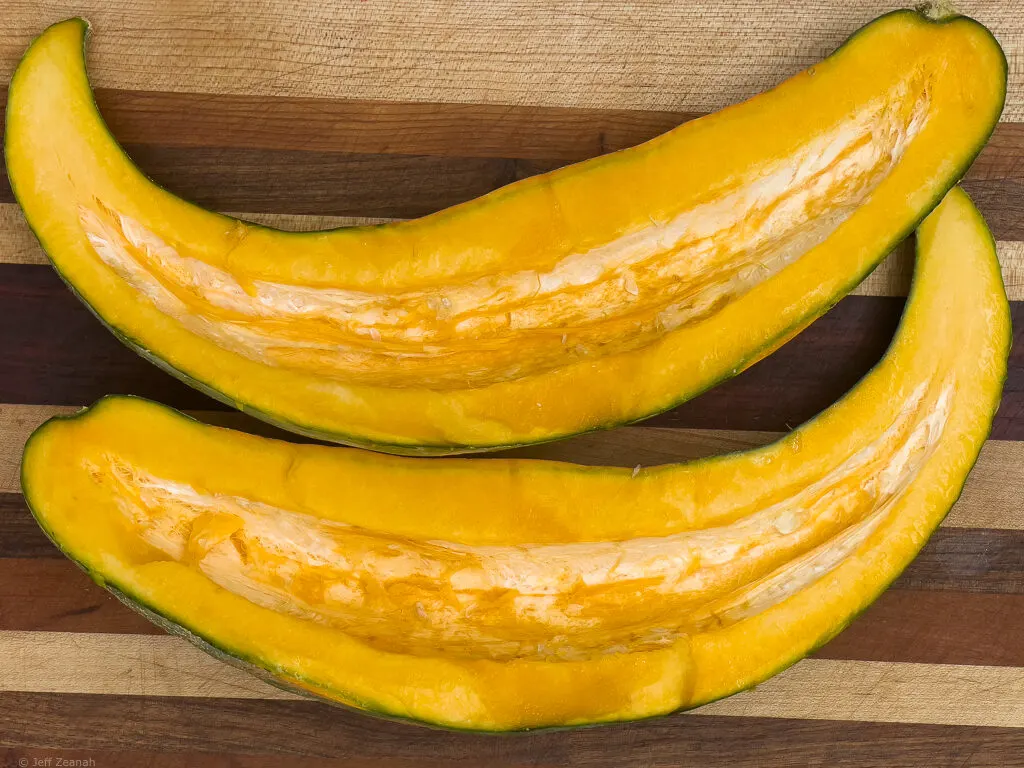
Split the squash lengthwise and remove the seeds. Roast at 400°F (200°C) for about 15 minutes lightly covered with foil. Remove the foil and roast for another 5-10 minutes till tender.
Final Preparation
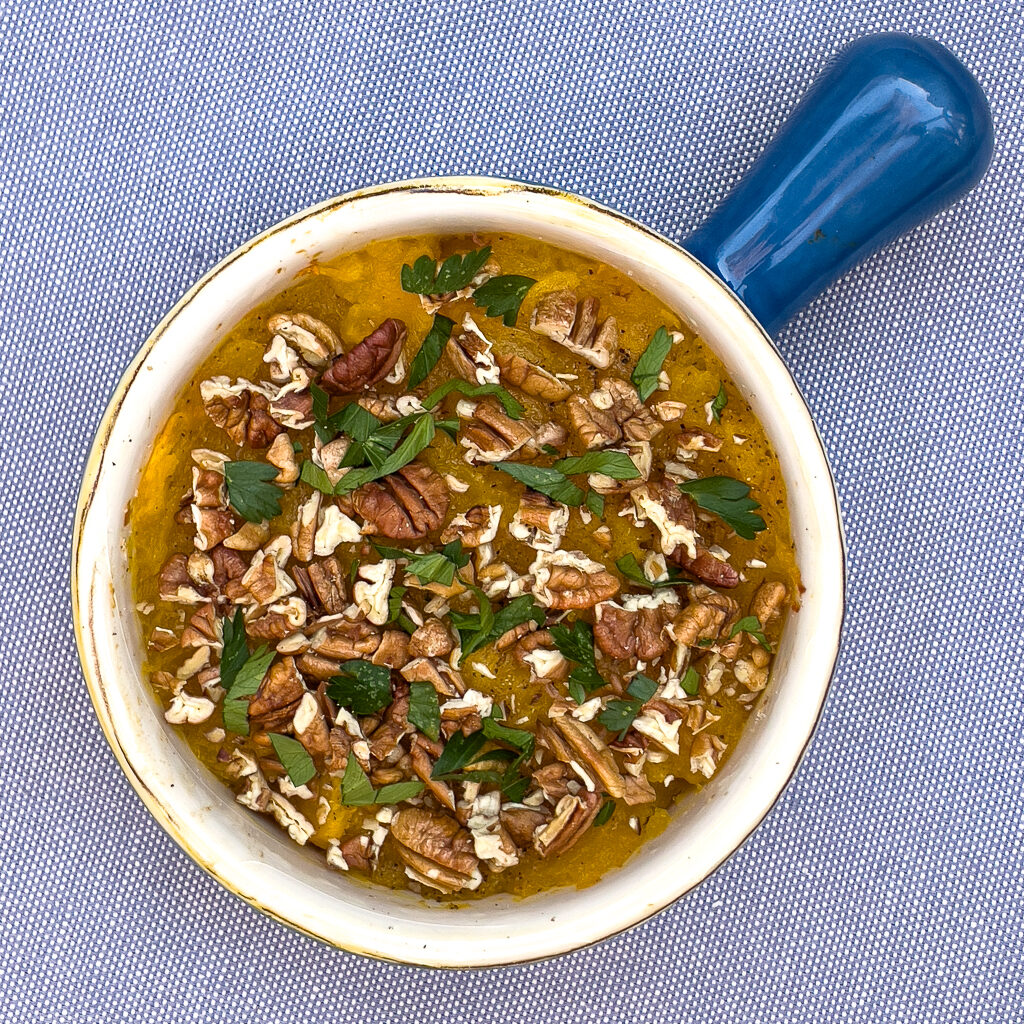
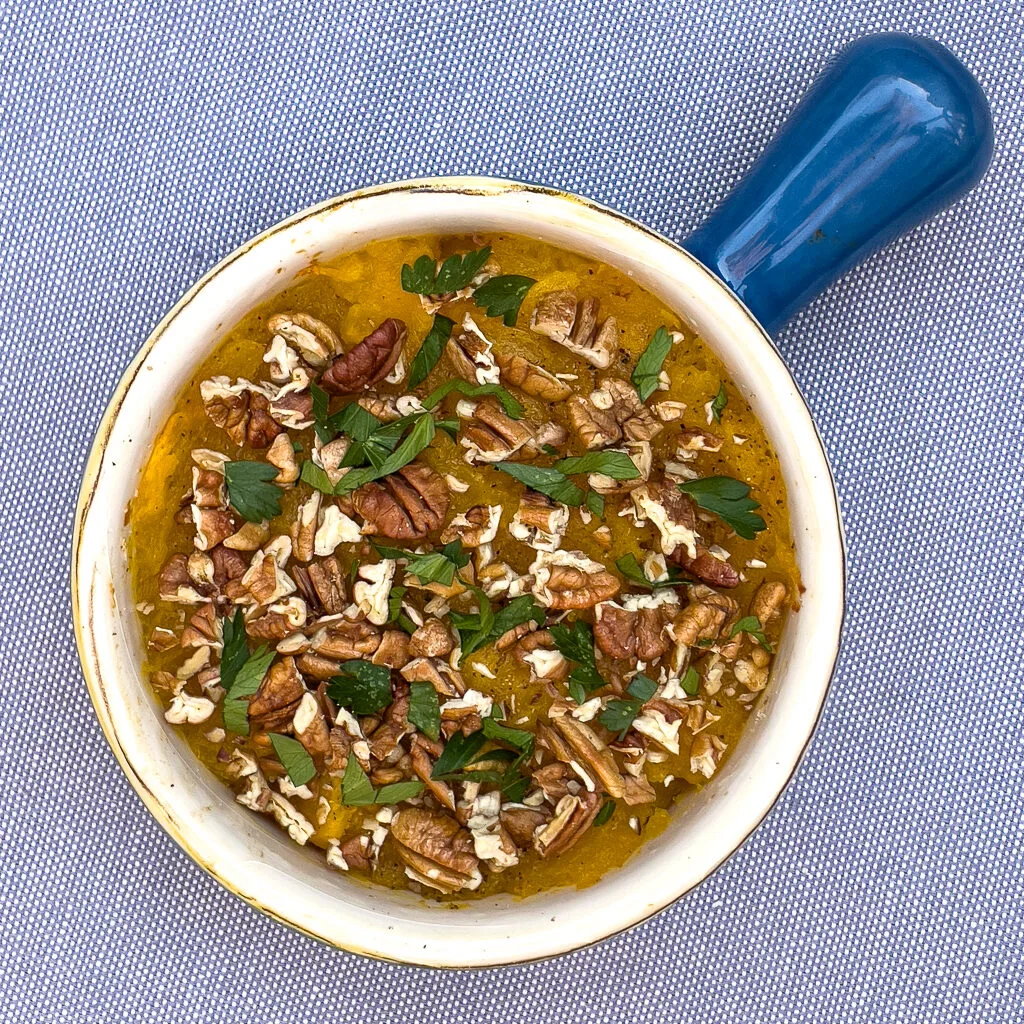
When cooled, purée the squash. A potato masher should do the job or a food processor if you prefer. Place the purée in an oven-proof dish. For final preparation dab the top of the squash with a bit of butter to enhance browning and bake again in 400°F oven for about 25 minutes to “toast” the top. Add chopped pecans and bake for another 5 minutes to toast the pecans. Remove from oven, and garnish with some fresh parsley or spouts if desired.


Related Posts


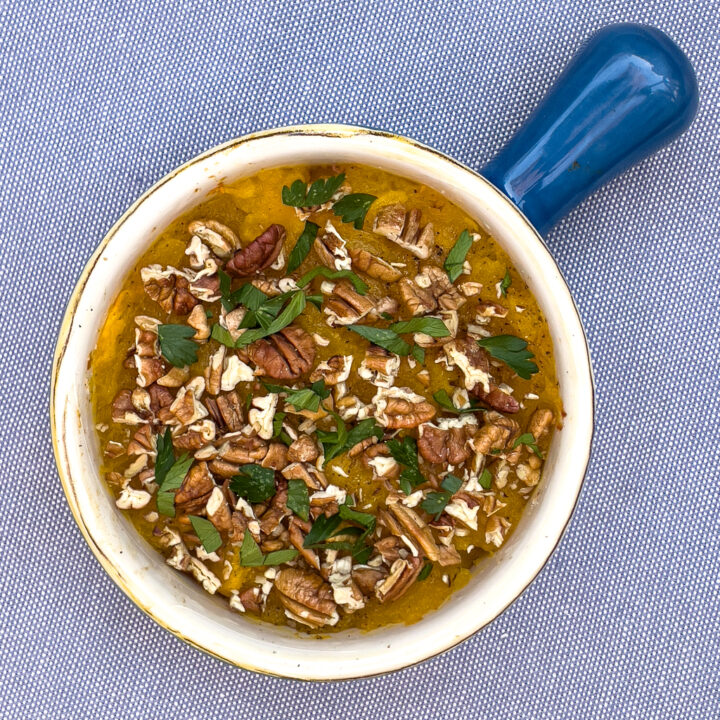
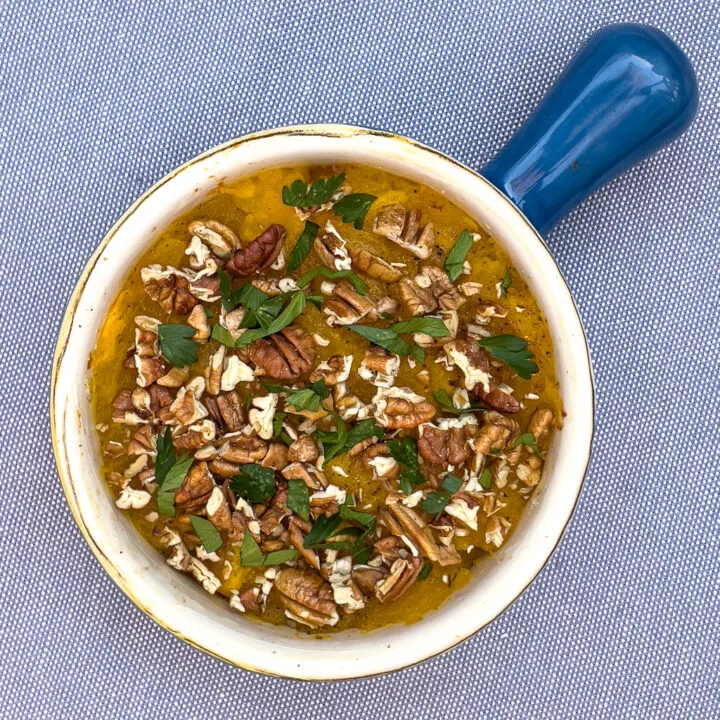
Georgia Candy Roaster Squash
A Southern Heirloom
Ingredients
- 1 Georgia Candy Roaster Squash (any size, but small to medium serves 4)
- Olive Oil
- Salt and Pepper
- A few dabs of butter
- Chopped Pecans
- Fresh parsley or spouts (optional)
Instructions
- Preheat oven to 400°F(200°C).
- Split the squash lengthwise. Remove seeds and tough strings attached.
- Line a roasting pan with parchment paper or foil (For easy clean up.). Place the squash on the pan and salt and pepper and lightly drizzle with olive oil. Cover lightly with a piece of foil large enough to cover the whole squash.
- Roast the squash for 20 minutes. Uncover and roast for 10-15 more minutes until the flesh is soft.
- Remove and let cool. When cool scoop out the flesh and puree. (A food processor or a potato masher will work.). Place into an oven-proof container.
- Closer to serving, dab a bit of butter on the top of the squash. Salt again, if needed. Place in 400°F (200°C) oven for about 15 minutes until the top is starting to toast and moisture is reduced. Add chopped pecans to the squash and bake for 5 more minutes.
- Remove from heat, and garnish with parsley or spouts.
Nutrition Information:
Yield: 4 Serving Size: 1Amount Per Serving: Calories: 260Total Fat: 6gSaturated Fat: 4gTrans Fat: 0gUnsaturated Fat: 21gCholesterol: 8mgSodium: 98mgCarbohydrates: 7gFiber: 3gSugar: 3gProtein: 3g
Calculated Nutrition is estimated.

Connie P
Sunday 22nd of October 2023
Your soup with Georgia Candy Roaster squash looks amazing- I know my family will love it! Where would I find the squash? If I can't find the Georgia Roasted Squash- Can you suggest another Squash I could substitute? Love your site!
Jeff Zeanah
Sunday 22nd of October 2023
I see more seed providers promoting the squash and therefore they should be found in more markets in the Southeast US. But from my hits to this recipe it appears mainly in Georgia and the Southern areas of Appalachia mountains.
This squash has a high water content. Because of that, I have gone to this double roasting technique to concentrate flavors. Any yellow squash will do. But I think best is a milder lighter taste. So I would stay away from Butternut, but there seem to be many interesting smaller pumpkin varieties available now. I wish I had time to try all of them.